

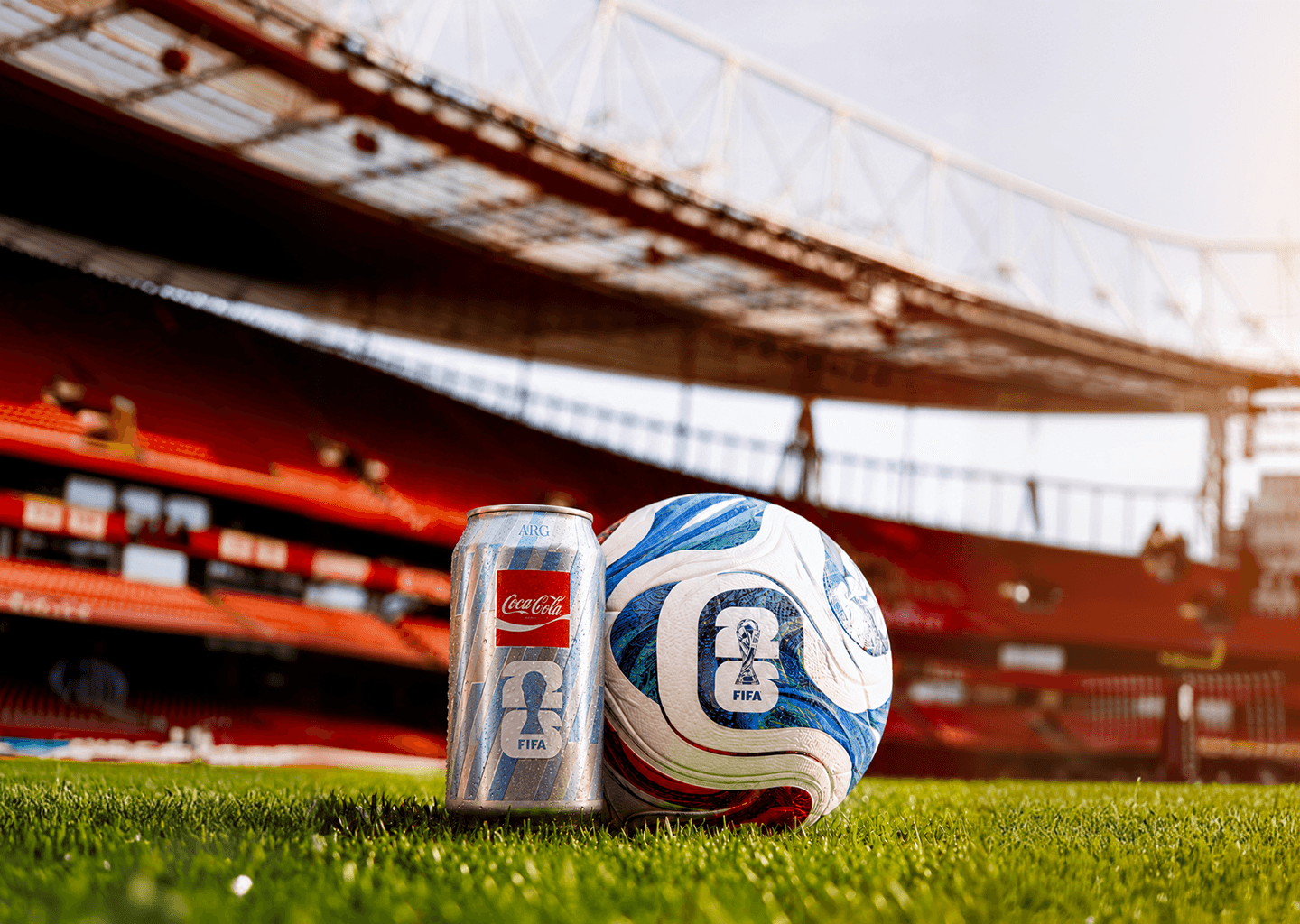
Coca-Cola made 48 different cans for a single World Cup. To anyone scrolling past a cooler, that reads as a design flex. It isn't the Coca-Cola World Cup 2026 marketing strategy is one of the sharpest packaging-as-marketing plays of the year, and it's worth breaking down properly.
The marketing strategy: the packaging is the campaign
Most brands at this scale make one "global" can and call it inclusive. Coca-Cola did the opposite. Every qualifying nation gets its own can its own colours and local cues while the red disc never changes. That's the difference between a gimmick and a packaging design system: the variation is structured, the brand mark stays locked. It's a repeatable format, not a one-off seasonal skin.

The marketing strategy: the packaging is the campaign
The design is the surface. The strategy is printed on it. Every can carries a unique QR code. Scan it, and that nation's design drops into a digital collection — each scan doubling as a sweepstakes entry. This QR-code marketing campaign turns a can from something you consume and discard into something you collect. The shelf becomes a game board. And every scan quietly hands Coca-Cola first-party data, with zero paid placement. The insight is simple and a little ruthless: collecting beats buying. People chase a complete set harder than they respond to a discount. Coca-Cola built that compulsion straight into the packaging.
What marketers can steal from it?
The lesson isn't "make 48 versions of something." It's that the best brand marketing in 2026 doesn't interrupt people it's built into the thing they already reach for. Coca-Cola didn't run a campaign alongside the product. It made the product the campaign. Coke didn't sell a drink this World Cup. It sold a collection. That reframe from product to participation is the move worth keeping long after the tournament ends.

Z Transform Media breaks down the campaigns shaping how brands actually grow. Follow along @ztransformmedia.
Image Credits: @coca_cola
(Project)
